

Blended finance has a plumbing problem. CFOs are the ones who can fix it.
As finance leaders gather in New York for UN General Assembly week, the challenge is no longer proving that blended finance works. It is getting more of it to the companies and projects that can put it to work.
There is a number that should concern anyone responsible for allocating capital.
In 2024, private finance mobilised by multilateral development banks and development finance institutions in low-income countries fell by 36%, from US$10.2 billion to US$6.6 billion.
That decline came even as total mobilisation rose 27% to US$278.5 billion. And it comes against an annual SDG financing gap that the UN now estimates at more than US$4 trillion.
The problem, in other words, is not simply that there is too little capital in the world. It is that too little capital is reaching the places where it can have the greatest impact.
Blended finance is supposed to help solve that problem. But if it is going to move from a relatively small financing niche to something capable of operating at scale, companies and particularly their CFOs need to play a much bigger role in shaping it.
Why this belongs on the CFO's desk
For CFOs, the issue becomes clearer when you look at two numbers.
The first is the cost of capital. Investors report that risk pushes financing costs for energy projects in emerging and developing economies to at least two to three times those in advanced economies or China. For a capital-intensive project, that difference can determine whether an investment clears the hurdle rate or never gets beyond the investment committee.
The second is where institutional capital actually goes. UK asset owners sit on around £6.2 trillion of assets, yet currently allocate only 4.2% of their portfolios to emerging markets and developing economies. Just 0.2% goes into private markets in those economies. There is capital looking for productive investment and there are businesses with viable projects that need financing. What is often missing is a structure that allows the two to meet. That is where blended finance comes in.
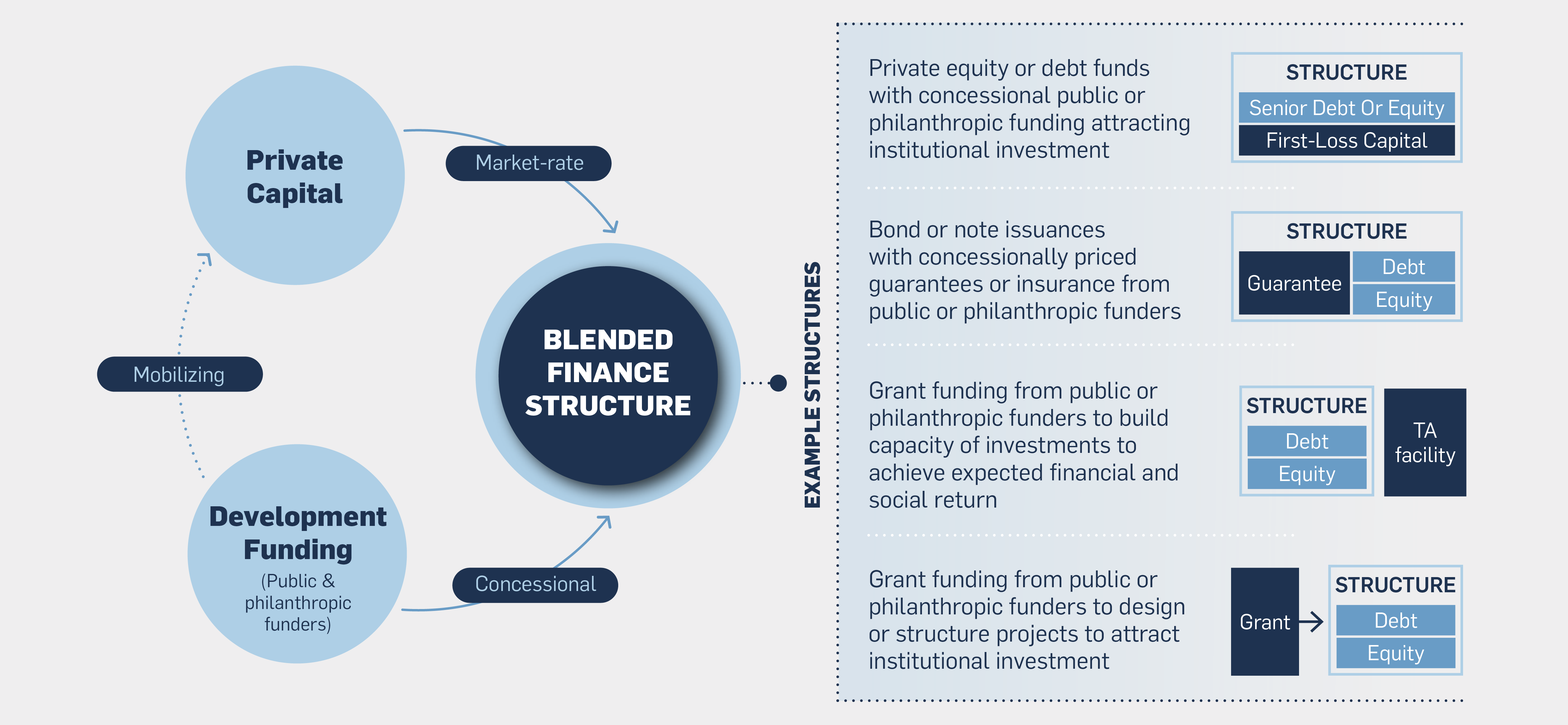
By using concessional, philanthropic or public capital to absorb risks that commercial investors cannot or will not take, blended structures can lower the cost of capital and create an investment proposition that works for all sides.
The market is growing. Annual blended finance flows increased from around US$14 billion in 2020 to roughly US$24 billion in 2024, according to the CFO Coalition's Business-Led Blended Finance Playbook.
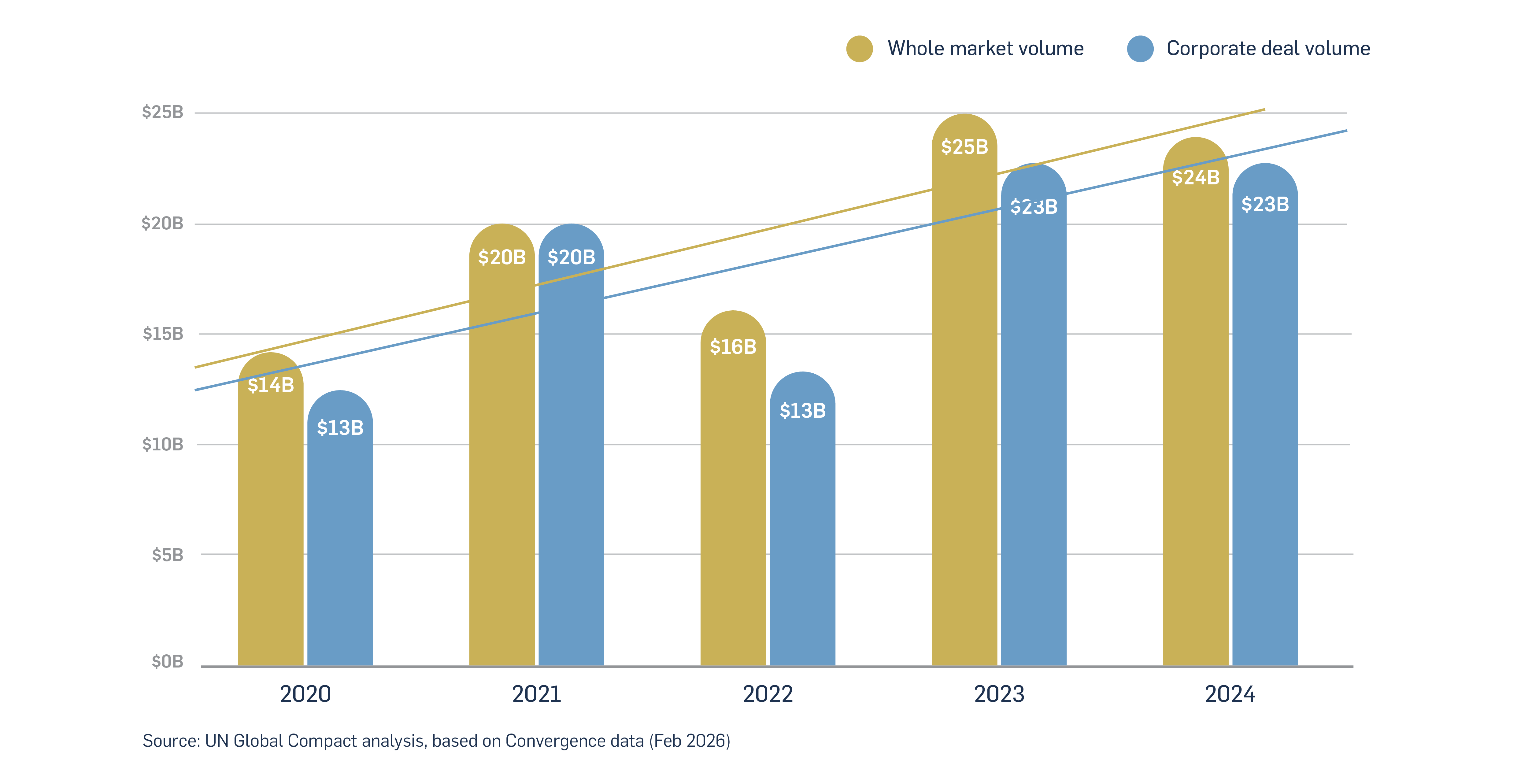
But against a financing gap measured in trillions, US$24 billion remains tiny. The question is how to make these structures easier to build, easier to repeat and much easier for companies to use.
Companies need to become architects, not recipients
One of the central conclusions of the Playbook, launched during London Climate Action Week in June, is that blended finance has largely been designed from the perspective of the capital provider. Most guidance starts with governments, development banks, foundations and investors. Companies tend to appear at the other end of the process as recipients of capital. That misses something important.
Companies are often the ones developing the projects, understanding the customers, managing the supply chains and carrying the operational risk. They know where a financing constraint is stopping an otherwise viable investment from going ahead. They therefore need to be involved much earlier in designing the solution.
The existing market gives us some indication of what happens when they are. Corporate participation in blended finance is heavily concentrated in energy and infrastructure, which together account for close to three-quarters of corporate activity and companies tend to favour direct transactions rather than intermediated funds.
That is understandable. Businesses are more comfortable committing capital when they can see the asset, understand the economics and influence the outcome. The challenge is to extend that approach into many more sectors and markets.
What this looks like in practice
The Playbook includes several examples of businesses using blended finance to solve very different commercial problems.
Take Rite Water, an Indian clean-water and solar company. Its financing constraint will be familiar to many growing businesses in emerging markets. Domestic banks required collateral worth 40–50% of a loan. For an asset-light engineering, procurement and construction company, that was simply not available. The solution was not another project loan. Incofin's Water Access Acceleration Fund, a blended fund anchored by Danone alongside the European Investment Bank and others, invested €7.5 million of equity directly into the company. That investment strengthened the business sufficiently to attract another €3.65 million of follow-on equity. More importantly, Rite Water's commercial debt capacity increased from €5.68 million to €16.3 million. The catalytic capital did not replace commercial finance. It enabled it.
Tata Steel faced a very different challenge when considering the decarbonisation of its Port Talbot steelworks. The economics of replacing blast furnaces with an electric arc furnace could not be supported by commercial investment alone. A £500 million UK government grant, alongside £750 million from Tata Steel, made the £1.25 billion project viable, with the new assets expected to reduce the site’s carbon emissions by around 90%.
Blended finance is not confined to emerging-market infrastructure. FCC Construcción, Spain's largest construction company, used a €6.5 million structure combining 70% EU Horizon Europe grant funding with 30% consortium co-financing to bring together 13 organisations across five countries to tackle one of infrastructure's least glamorous but most consequential problems: permitting delays. Three companies. Three very different financing constraints. Three different capital structures. What connects them is that each started with the underlying commercial problem rather than with a predetermined financing instrument.
The real challenge is making the next deal easier
This is where blended finance still has work to do. The barriers are often surprisingly mundane. Due diligence takes too long. Documentation requirements differ between providers. Companies do not know where to start. Partnerships are assembled from scratch. And too many successful transactions remain one-offs rather than becoming structures that can be replicated.
The lesson from Rite Water is telling. The company was able to move through diligence partly because it had maintained the same auditor for a decade. Its financial records were credible. Its track record was verifiable. And early alignment with funders over the documents they would need reduced friction later in the process. None of that makes for a dramatic financing innovation. But it is exactly the sort of preparation that determines whether capital can move.
The next phase of blended finance therefore needs to be less about inventing ever more sophisticated structures and more about making good structures repeatable. That means clearer entry points for companies. More standardised diligence. Better data on what has worked. Capital stacks that can be reused rather than rebuilt. And a much stronger connection between the businesses that need investment and the institutions capable of providing catalytic capital.
That is part of the agenda at the SDG Investment Forum on 22 September, where the CFO Coalition's 60-plus member companies will come together with investors and development finance leaders to work on practical entry points, capital-stack design and the evidence base needed to scale.
The Coalition also intends to establish a working group to turn the Playbook's recommendations into clearer transaction pathways for companies. Because ultimately, blended finance is not about removing risk from private investors. It is about identifying each risk, deciding who is best equipped to carry it, and structuring the financing accordingly. CFOs do that every day. The opportunity now is to bring that discipline into blended finance much earlier - not once a transaction arrives for approval, but while the transaction itself is being designed.

