
Financing the Phase-In: Climeworks and the CFO Case for Direct Air Capture
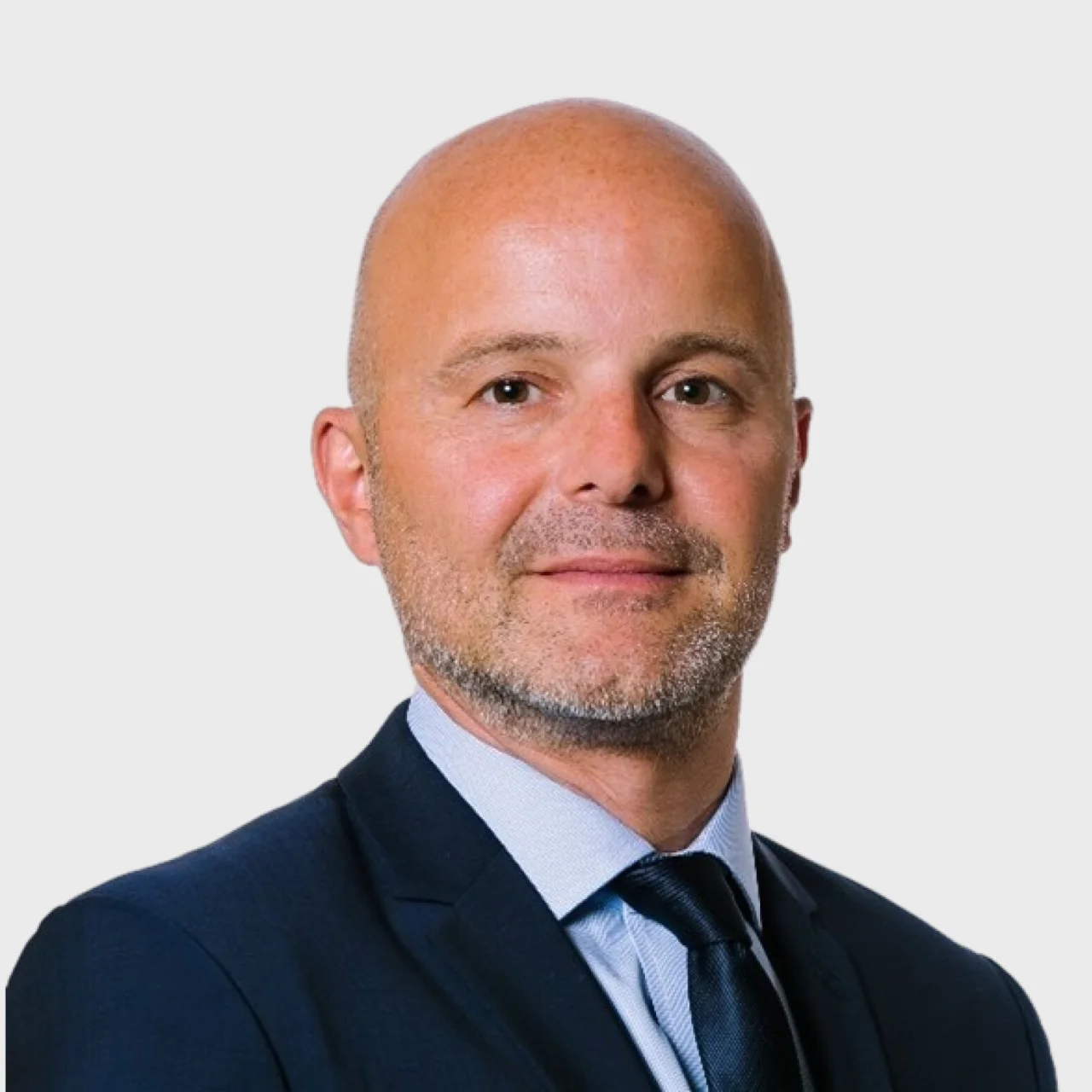
Transition finance is not only about phasing out fossil fuels—it is also about phasing in the breakthrough solutions that make a 1.5°C-aligned economy possible. Among these, carbon removal is emerging as a critical tool for meeting net zero. Climeworks, a pioneer in direct air capture (DAC), has positioned itself at the intersection of innovation and necessity. Its CFO, Stéphan TRUCHOT, makes the case that carbon removal merits the same kind of strategic investment once given to solar and wind.
“There is no net zero without carbon removal,” Stéphan explains. “The IPCC says that even if we reduce emissions by 90% by 2050, we will still need to remove around 10 billion tons of CO2 annually. That is about one quarter of today’s global emissions and every year we overshoot, the challenge only grows.”
From Scale-up to Systemic Solution
Climeworks has grown rapidly. The company has raised $800 million in private funding, scaled from around 100 employees to over 400 and built two world-leading plants that permanently remove carbon from the atmosphere. According to Climeworks, its Orca plant in Iceland is emblematic of the company’s mission: to design, own and operate industrial-scale DAC facilities that deliver measurable, permanent removals.
Often described as “giant vacuum cleaners” for the atmosphere, DAC facilities filter out carbon dioxide at extremely low concentrations - just 430 parts per million in ambient air - and store it safely underground for thousands of years. “Direct air capture is the most permanent, most measurable way to remove carbon,” Stéphan says. “We can meter the gas through a pipe and independent third parties verify how much is stored underground.”
The Investment Case for Carbon Removal
Skeptics often point to the cost of DAC today. Stéphan acknowledges that it remains expensive, but stresses that history offers clear lessons. “Solar was once seen as uneconomical. In the 1990s, saving a ton of CO2 with solar cost around $500 per ton. Today, after scaling from 1 GW of global capacity to nearly 1,800 GW, that cost is down to $30–40 per ton. We need to put DAC on the same trajectory.”
The path forward requires both capital and demand. Just as early subsidies and feed-in tariffs enabled the growth of solar and wind, targeted instruments will be needed to de-risk early investments in carbon removal. “We believe in the power of capitalism to scale innovation,” Stéphan argues. “Private investors will drive much of this, but because of the long time horizons, we also need government mechanisms—grants, per-ton incentives, and risk-sharing—to speed up deployment.”
For CFOs, the business case for carbon removal is about risk, value, and cost. From Stéphan's perspective, locking in high-quality removals hedges regulatory and supply-chain risk as compliance markets tighten; it protects license to operate and wins customers, investors and talent who increasingly scrutinize net-zero credibility.
Buying Time, Preserving Optionality
One of Climeworks’ key insights is that DAC should not be seen as a stand-alone solution, but as part of a diversified strategy. “The best way is to build a portfolio across technologies,” Stéphan notes. “Nature-based credits are available today at relatively low cost, but they are not permanent. Over time, as they become capacity constrained and more expensive, companies will need to shift to technological removals like DAC. What we do is help customers think through their strategy over the next 15 to 20 years—how to minimize cost while ensuring availability throughout this shift.” Investing in removals today exploits the cost curve by securing multi-year offtakes before capacity is scarce and prices rise. Treating removals as a strategic portfolio allocation—starting small now and scaling over 15–20 years—preserves optionality, ensures future availability of permanent, third-party-verified tons, and turns climate liability into a bankable asset class aligned with long-term value creation.
For CFOs grappling with long-term net-zero targets, Stéphan’s message is clear: act early. “You might be tempted to wait until you’re forced to act,” he says. “But there’s a high cost to waiting. Today, we are not yet supply-constrained. In five to ten years, as compliance schemes tighten and demand rises, capacity will be scarce and prices higher. If you invest now, you buy optionality and secure future access at a much lower entry price.”
Lessons for CFOs
As a scale-up CFO in the sustainable finance space, Stéphan highlights the unique challenges and opportunities of leading finance in a fast-moving sector. “As a CFO in a scale-up, you need to be prepared for the unexpected. Policy environments and investor appetite can shift quickly. You rely on long-term planning, but you must also build flexibility and contingencies into your models.”
For larger, more mature companies, his advice is to integrate carbon removals into transition plans now rather than later. “Not many CFOs have thought deeply about carbon removals yet. That’s understandable - reducing your own emissions always comes first. But it’s not enough. By starting small today, you reserve capacity for tomorrow and keep agency over how your company delivers credible net-zero strategies.”
Transition Finance in Action
The story of Climeworks offers a glimpse of how transition finance can operate in practice. It shows how CFOs can mobilize capital into emerging solutions, how policy and private finance can combine to drive scale and how corporates can integrate new technologies into long-term transition plans.
Carbon removal may be at the frontier now, but the trajectory is familiar: high early costs, followed by exponential scaling and falling unit prices. Just as with solar and wind, the inflection point will come from investors willing to back innovation before it is mainstream.
“In the end, it always lands on the CFO’s table,” Stéphan reflects. “Whether it’s in my own company or in the broader sustainability strategies of our customers, finance leaders hold the key. Transition finance is about choices and making those choices early can define whether we meet the 1.5°C target.”

